
Patience, Persistence, and the Future of Nuclear Disarmament
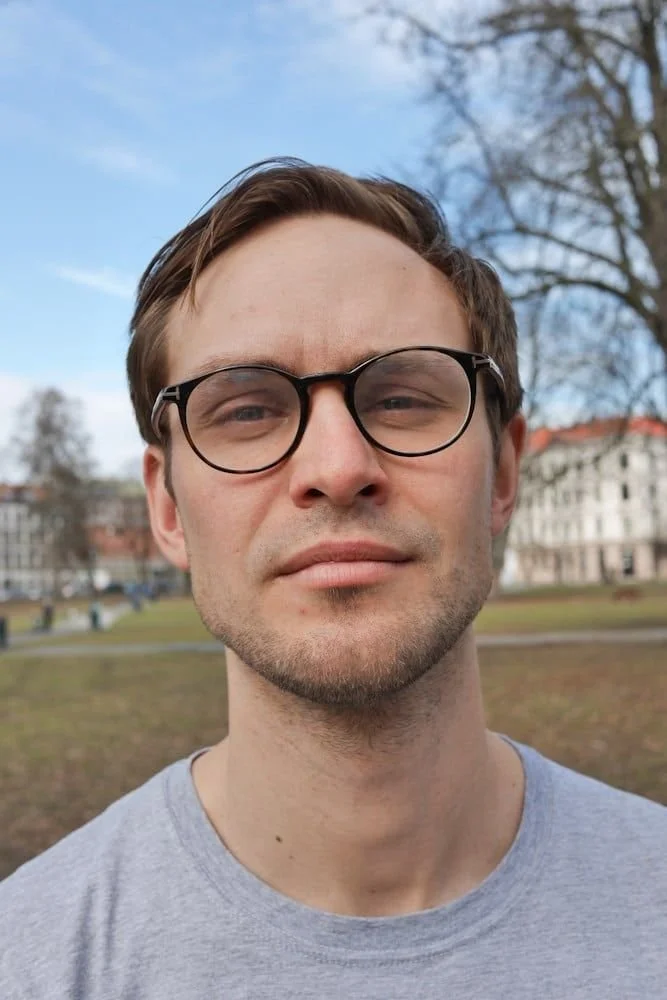
A Conversation with Dr. Kjølv Egeland
Written by Esme Mulloy
After sitting down with Dr. Kjølv Egeland, one conclusion became clear: lasting progress toward nuclear disarmament is unlikely to come from a single breakthrough. As much as we might like to think otherwise, it is the gradual work of changing ideas, building institutions, and preparing for the political moments when change becomes possible.
Dr. Egeland is a Senior Researcher at NORSAR (Norwegian Seismic Array) a non-profit research foundation that combines nuclear test-ban monitoring, geoscience research, technology development, and scientific capacity-building to support both Norway and the international community. At NORSAR, he conducts intradisciplinary research on the topics of international security and nuclear disarmament. Dr. Egeland has worked with IPPNW Norway and attended the 24th IPPNW World Congress in 2025. I reach out to him as a part of my role with IPPNWC as a Scientific Communications Intern, to learn more about his work on the intersection of climate change and nuclear disarmament as well as his thoughts on disarmament treaties and the international community, based on his existing work as a researcher and with NORSAR. What is the best strategy for disarmament? Is a nuclear free world a possibility? How can we plan for a sustainable and safe future?
I began by establishing how his interest in nuclear disarmament started and where he had developed this interest. Dr. Egeland responded that his interest in nuclear disarmament began when he was working at a think tank and happened to work on one of their large projects in nuclear disarmament. This was before 2021 when the Treaty on the Prohibition of Nuclear Weapons (TPNW) came into force and humanitarian efforts into disarmament were just ramping up. He described a lot of activity being done in this field specifically. He continued:
I found the topic to be extremely interesting and symbolic of international relations more broadly, which is my academic field. So, I interned there whilst studying and subsequently did my PhD, which I then ended up doing on nuclear disarmament because I felt I had gained some knowledge and a certain network in that field.
The ways people come to work in this field are often quite random, maybe a chance involvement in a think tank project or another opportunity that sparks a deeper interest. My own path began with marketing articles for researchers at a nonprofit and grew through my involvement with IPPNWC. I had always followed the news and global politics but didn’t necessarily see how I could get involved or what role I might play. As I moved through my undergraduate degree and met people working across different fields, many of them politically active, I began to see the range of possibilities available to work in this space. Listening to their stories on how they got involved in various activism really solidified the diversity of this field.
Perhaps because there are so many people from different disciplines working in and around it, it is also a field that is often misunderstood by those not completely immersed in it. I asked Egeland what he wished more people understood about the work he did.
I think a common assumption that I'm keen to challenge is the idea that analysis and scholarship, or even debate and argument, can only be useful or impactful if we're able to convince incumbent policy makers, or if we're able to persuade the powers that be of a particular view.
But I think that if you look at how politics works over time, and how change happens in politics, that's rarely how things work. Much more often, what happens is that a certain way of viewing the world takes hold in a younger generation, which then grows up, and you have a more organic change.
So, if you just take one example, let's take the American position of the Nuclear Test Ban Treaty, which has been traditionally a huge talking point in multilateral nuclear disarmament diplomacy since the mid 1950s. No senior level or high-ranking policymaker, as far as I'm aware, ever changed their mind on that topic.
But the US nevertheless changed its position on it and signed the treaty in 1996. Because when the Clinton administration came in, Clinton himself and everyone around him had already accepted, or they had been in favour of the CTBT since their student days.
That's something that we need to be also mindful of and perhaps be a bit patient. I get frustrated when people say, ‘oh, you're not going to be able to persuade Putin, or Trump’, or whoever. But that's not the point. And I don't think anyone is expecting that.
This approach is a refreshing way of considering work that can often feel like it is having no impact, especially in our fast-paced world. Perhaps we should reframe; there is an impact, but we may not necessarily be able to see it for years. That doesn’t negate the importance of these smaller actions.
How do these smaller actions fit into calling for disarmament on the international and national stage? I asked Egeland how international organizations can improve in regard to disarmament policies. Egeland gave this considered response:
I think that what we should get better at in multilateral nuclear disarmament diplomacy more generally is to not allow ourselves or not allow institutions to normalize things. I think that often multilateral processes like the NPT review cycle and things like that have had the effect of portraying the nuclear world as being managed and under control, when in reality, that's not necessarily the case. So, I'm all for consensus, and I'm all for being agreeable, but not at the expense of legitimizing or normalizing unhealthy or unsustainable security policy.
When asked if individual countries should have a responsibility in pursuing disarmament efforts, Egeland responded:
For most countries in the world, I would argue that they have a strong interest in pursuing or advancing nuclear disarmament. And there's all sorts of ways they can do that through joining treaties, or making statements, and doing things that are uncomfortable for the nuclear armed states. You could raise uncomfortable questions when you have state visits, for example.
If you want to really do something, the tools that are available include recalling envoys or ambassadors, which is something we saw in the process that led to the adoption of the Comprehensive Nuclear Test Ban Treaty, when, for example, several countries or Pacific countries recalled ambassadors to France in protest of French nuclear testing.
In our highly politicized and militaristic world, it might feel impossible to ask countries to disarm and shift towards other solutions. However, Egeland’s suggestion of not letting ineffective policies be normalized and pushing for small change by both national and international organization presents a new way to make change on both fronts.
We then turned to the relationship between climate change and disarmament policy, a particular interest area of Egeland. “I could go on for a long time about that!” He joked. I asked how he came to study the connection. He responded:
I've been professionally engaged in nuclear weapons issues for the last several years. But as a private citizen, I'm very concerned about climate change. And so I wanted to explore how they connected.
I've been very frustrated and in a way also surprised when looking at specialized nuclear security studies, scholarship, and literature, including forecasts of how the nuclear world will look in 20 or 50 years. We have a large library of those kinds of books, and invariably, the words climate change aren't even mentioned. I find it surprising and very worrying, given the amount of people who study climate change. Also most responsible policy makers and people like the UN Secretary General have said that climate change is the most serious challenge humanity is facing, and will fundamentally transform the world and international politics within our lifetimes, or certainly our children or grandchildren's lifetimes.
If we are really on the cusp of these monumental, enormous changes in how the world works in global governance, then obviously, that will have enormous implications for nuclear policy as well.
The main thing missing from analyses of the climate–nuclear nexus is attention to how climate change itself, as well as the political and diplomatic initiatives developed to address it, shape and intersect with nuclear issues. How are they going to either obstruct or enable a nuclear disarmament or other nuclear policy changes in the future?
Egeland continued, reflecting on how climate and disarmament should be connected practically and in policy:
We should be mindful of the security implications of climate change, but we also need to be mindful of the climate implications of security policies. And we need to take very seriously the fact that the security policies we choose and pursue, will condition or shape the climate policy, both directly in the sense of direct emissions, but also more importantly, by dictating the climate for climate negotiations. And we're headed in the wrong direction right now, I think.
And that obviously isn't unique to nuclear security policies. It's a broader thing of security and defence policies. But nuclear weapons are very important within that broader whole, and so we need to be extremely sensitive to that.
This connection between disarmament and climate is one that has not always been made in past conversations about nuclear weapons. Centring disarmament a part of a larger conversation about our future and how that looks is key. We must intertwine climate policies and disarmament policies to achieve the joint goal of a long and sustainable future.
To this aim, we must reflect on how disarmament is viewed today. For decades, it could be argued that the focus is more on nuclear proliferation than coming to a sustainable disarmament agreement worldwide. With this in mind, I asked Dr. Egeland what he would say to those who do not believe this issue is a priority. Egeland responded:
I'm convinced that nuclear weapons are still around, they are still dangerous, they can be used. And we are arguably entering a period now with increased instability and with several nuclear armed states that are eager to climb in the hierarchy of states, of improving their relative positions vis-a-vis one another, which traditionally is a recipe for conflict if you look at the history of international relations.
Continuing in this line of thought, I asked if Egeland could see a future where full disarmament is achieved in the context of the current political conditions. He reflected:
I do not see it as happening with today's political conditions. But I think political conditions can change very quickly and much more quickly than a lot of people assume. If we look back to the mid 1980s, there were very few who were able to foresee the enormous changes that were about to happen with the end of the Cold War, the disintegration of the Soviet Union and all of those monumental changes.
Things can happen and change very quickly in international politics. Often those changes are for the worse, but sometimes, and we're allowed to hope, they can be for better as well. And I think one of the tasks for those of us who are interested in advancing arms control and disarmament and reducing nuclear dangers in the current moment is to try to develop ideas, solutions, and institutions that might be implemented if a window of opportunity should open in the future.
His answer was once again practical but also underlined with the hope that all those who work in this field must have.
Reflecting on our conversation, what stands out is the many different approaches to disarmament efforts. Dr. Kjølv Egeland has a practical way of approaching his work but also one that shows subtle optimism. His interest in looking at the intersection of climate and disarmament policy is a combination that may prove essential in shaping our future. Egeland’s points about resource distribution in these two fields raised questions of the danger of siloed research when working to effect change or develop policy. As a disarmament field, we are all working towards the same goal. We should be able to combine methods and resources to this common aim of a safe and healthy future.
We cannot know which efforts will ultimately prove decisive. What we can do is continue strengthening public understanding, developing new ideas, building institutions, and advocating for change. When political conditions shift, as history shows they often do, we are then prepared to seize the opportunity. Progress toward disarmament is rarely the result of a single breakthrough. Rather, it is built through persistent work that lays the foundation for the future. That persistence may be the most important lesson that IPPNWC, and anyone working in disarmament, can carry forward.