Prescriptions for Health in a Nuclear Age
June 6 2026
Written by Arlo Jukes
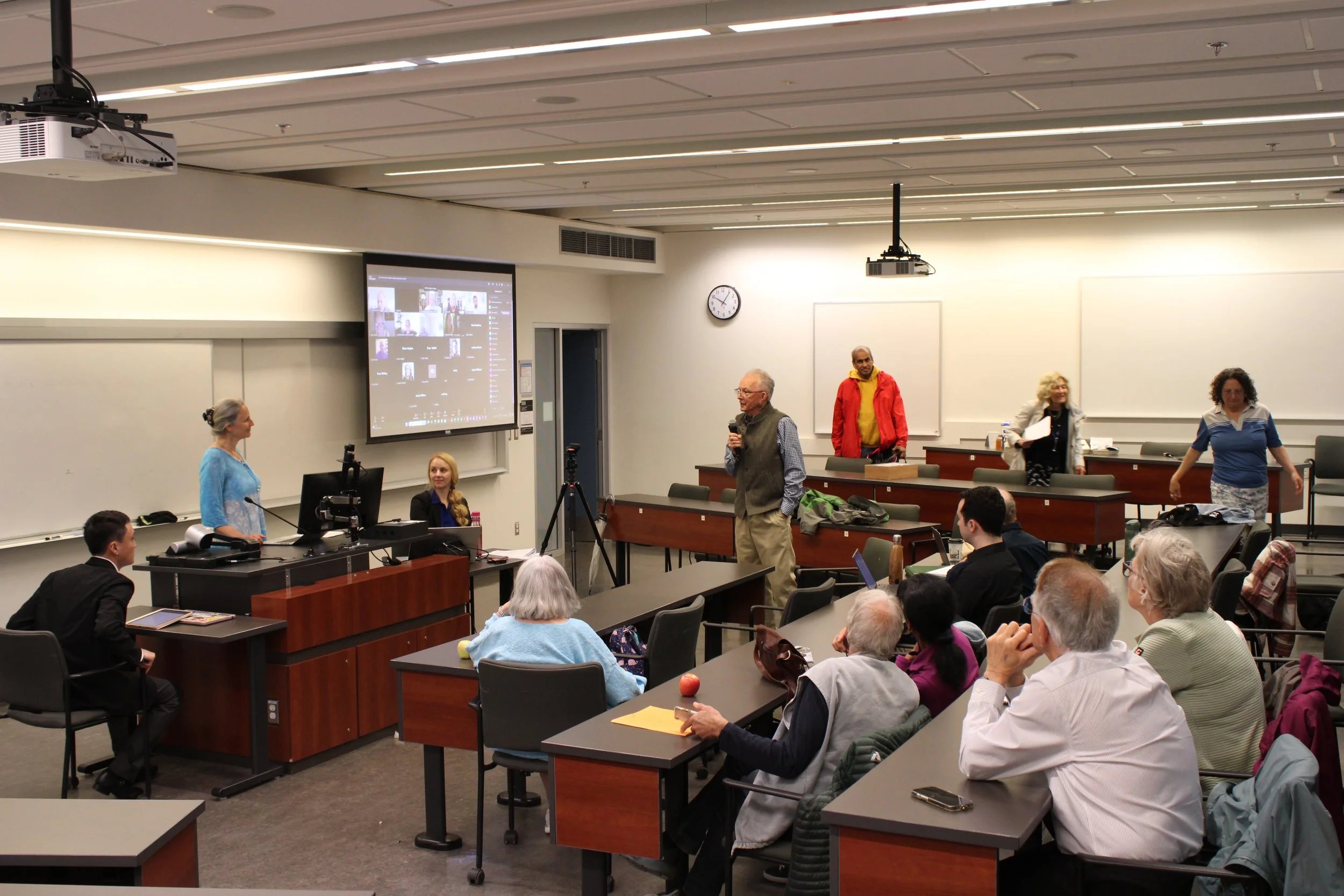
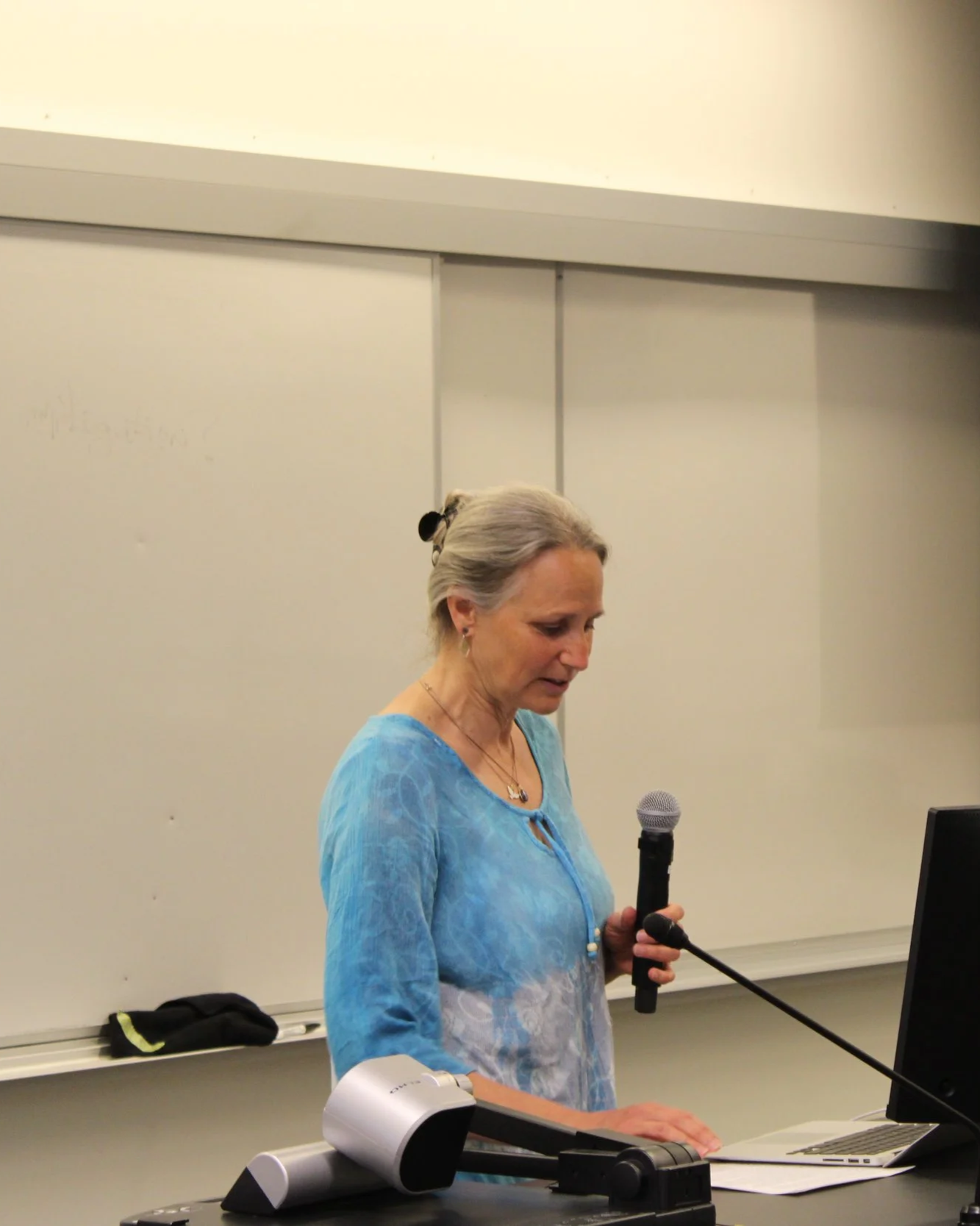
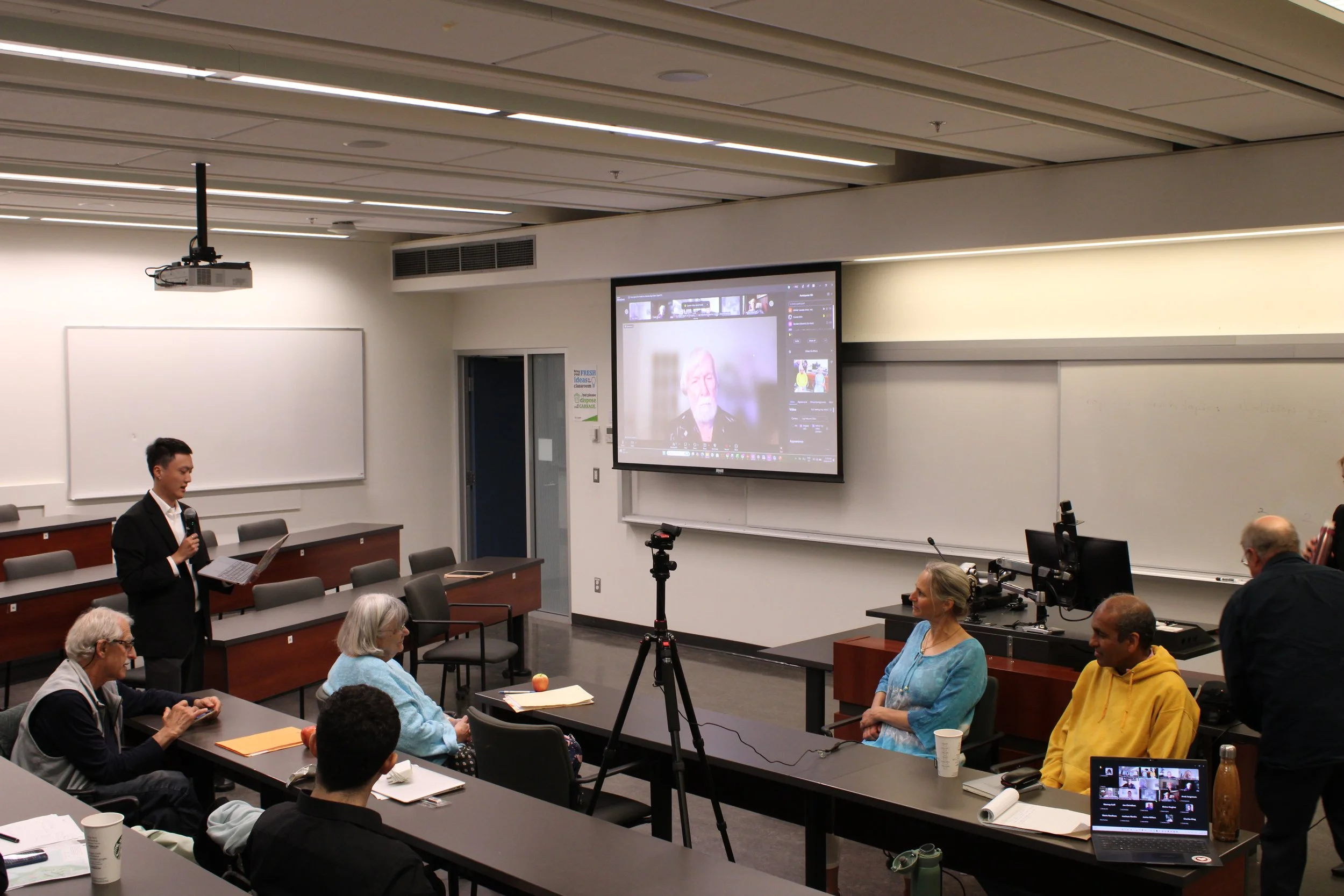
In a time of increasing global uncertainty surrounding the health of the planet, International Physicians for the Prevention of Nuclear War Canada invited five expert speakers to give their thoughts on Prescriptions for Health in a Nuclear Age.
The event, which took place in Vancouver, BC and virtually, in early June 2026, brought together medical experts and physicians to discuss how to create a healthier and safer world.
Dr. Linda Thyer: Planetary Health and The Polycrisis
The conference began with Dr. Linda Thyer, a family physician and a founding member of West Coast Doctors for Planetary Health.
She spoke about the polycrisis, when different crises exacerbate the effects of one another.
“We're seeing the climate (...) crisis exacerbating food insecurity and worsening the economic crisis as well,” Dr. Thyer said, pointing out that in a polycrisis,
the harm becomes greater than the sum of its parts.
“As a physician, I tend to take the perspective that health underpins our well-being,” Dr. Thyer said, “and when our health is threatened, our security and
well-being are threatened.” To Dr. Thyer, the health of the planet is a necessity for human well being, a point underlined by a quote she recounted from Chief Seattle:
“This we know. The earth does not belong to man. Man belongs to the earth. Man did not weave the web of life. He is merely a strand in it. Whatever he does to the web, he does to himself.”
With this framework in mind, Dr. Thyer went over the negative impacts of nuclear power on the earth, and on humans.
“Residents living near nuclear power plants were found to have a higher risk of all cancers,” she said, adding that children under 5 had the highest risk for all cancer.
Cancers affecting power plant workers is not the only harmful effect on humans caused by nuclear power, as extracting uranium will continue to have significant long-term effects on future generations.
In tackling such large, societal issues, Dr. Thyer recalled a quote from Buckminster Fuller, who said that “You never change things by fighting the existing reality. To change something, build a new model that makes the existing model obsolete.”
For Dr. Thyer, the path away from the polycrisis is to create a new model, which does not rely on damaging the environment to function.
Dr. Gordon Edwards: The Silent Slide Towards Nuclear Proliferation
Another expert speaker at the event, Dr. Gordon Edwards, discussed how Canada plays a role in reinforcing the nuclear status quo.
He compared having nuclear weapons to having an addiction, where once a country has them, they refuse to give them up.
“The addict will always deny the problem and needs the help of friends,” said Dr. Edwards, “Canada, as a friend of the world, really has to play its role in working towards the elimination of nuclear weapons to a much greater degree than it has done so far.”
While Canada may be in a prime position to help nations of the world with nuclear disarmament, Ottawa has actually continued to help proliferate nuclear technology by agreeing to sell 22,000 tons of Uranium to India.
Dr. Edwards also brought attention to the government of Saskatchewan's investment in the eVinci Reactor which produces fuel 85 per cent of the way to usability in nuclear weapons.
This process is misrepresented as recycling dangerous nuclear waste, when in reality it does not reduce the multi-thousand year period in which the material is dangerous and only opens up the possibility of weapons manufacturing.
According to Dr. Edwards, the Canadian government hopes to portray these investments as beneficial to the environment. In contrast, he drew attention to the U.S. State of Texas which has an installed renewable battery capacity of 20,000 Megawatts, double the currently installed nuclear capacity in Canada.
“The current generation is much less aware of the challenge of nuclear weapons and nuclear warfare compared with previous generations,” said Dr. Edwards, “So never has the need for the IPPNW to make its voice heard (...) been more acute than now.”
Dr. Ira Helfand - the Policy Behind Nuclear Disarmament
While nuclear warfare is not at the forefront of most people’s thoughts, Dr. Ira Helfand reminded all how real the threat really is.
“Nuclear weapons are an immediate life-threatening emergency, and we need to respond to that,” Dr. Helfand said, We need to understand that if we have a nuclear war, nothing else that we're doing is going to matter, and that we really are on the brink of a nuclear war.”
“We go about our daily lives as though it couldn't happen and so it won't happen. And that is a delusion,” Dr. Helfand said, underlining the danger by pointing out that five out of nine nuclear superpowers have been at war in the last 14 months.
While in the later stages of the Cold War Detente meant that steps toward nuclear disarmament were taken, there has been virtually no progress towards a non-nuclear future in the 21st century. Despite this, Dr. Helfand is still hopeful that Canada can play a role in creating a nuclear-free world
“I referenced the slogan of the anti-drunk driving movement here in the United States; that slogan is friends don't let friends drive drunk. I urge Canada to approach the United States with the message; friends don't let friends have nuclear arsenals. And I think it's still a role that Canada can play despite the wall that Donald Trump has tried to create between our two countries.”
Despite this period of diplomatic uncertainty, Dr. Helfand spoke of the ongoing effort to have all nine nuclear armed states agree to take steps to lower the risk of nuclear war, starting with the United States.
Part of the effort undertaken by Dr. Helfand was to garner grassroots support by bringing a platform of policy prescriptions to population centres around the United States. At the time of speaking, around 80 cities and five state legislatures have officially supported the campaign.
The campaign also gained support from over 700 NGOs in the United States, most recently becoming involved with organized labour and a student campaign called Students for Nuclear Disarmament.
For Ira Helfand, the best path to nuclear disarmament is a collaborative one that we can all work towards, together.
The Reality of The Nuclear Non-Proliferation Treaty with Dr. Cesar Jaramillo
Dr. Cesar Jaramillo, whose background is in creating policies to fight against nuclear armament, opened his speech with a wake up call that disarmament will not happen under the current Nuclear Non-Proliferation Treaty (NPT).
A recent failure in the United Nations to reach an agreement on the NPT marks the third consecutive time since 2010 that no consensus has been reached, and Dr. Jaramillo says that the situation is unlikely to change for the next few years.
“From my assessment, it is not a priority in Beijing or in Tel Aviv or in Washington DC or in Paris or in London or in Pyongyang or in Delhi or in any of the nuclear weapons states,” said Dr. Jaramillo
The process of NPT drafts is “performative routine” according to Dr. Jaramillo who says that they begin strong in the initial stages, but are weakened by nuclear armed states that are completely unwilling to give up any concessions on their weapons.
“I think as currently structured and implemented, I'm comfortable in saying categorically the NPT will not lead to nuclear abolition,” Dr. Jaramillo stated, adding that efforts should be focused on making real changes.
The Canadian government has been unwilling to attend as an observer for the Treaty on the Prohibition of Nuclear Weapons in spite of lobbying from Dr. Jaramillo and invitations from states like Mexico, Austria and Costa Rica.
“I think that there is a profound lack of leadership (who will) unapologetically denounce these things, to unapologetically call for greater respect of institutions, of processes, of treaties, of the rule of law,” Dr. Jaramillo said.
Despite this, he ended his speech on an optimistic note, saying that there is hope as long as people are able to impact the politics of the Non-Proliferation Treaty.
M.V. Ramana, the Forces Pushing us Away from a Solution
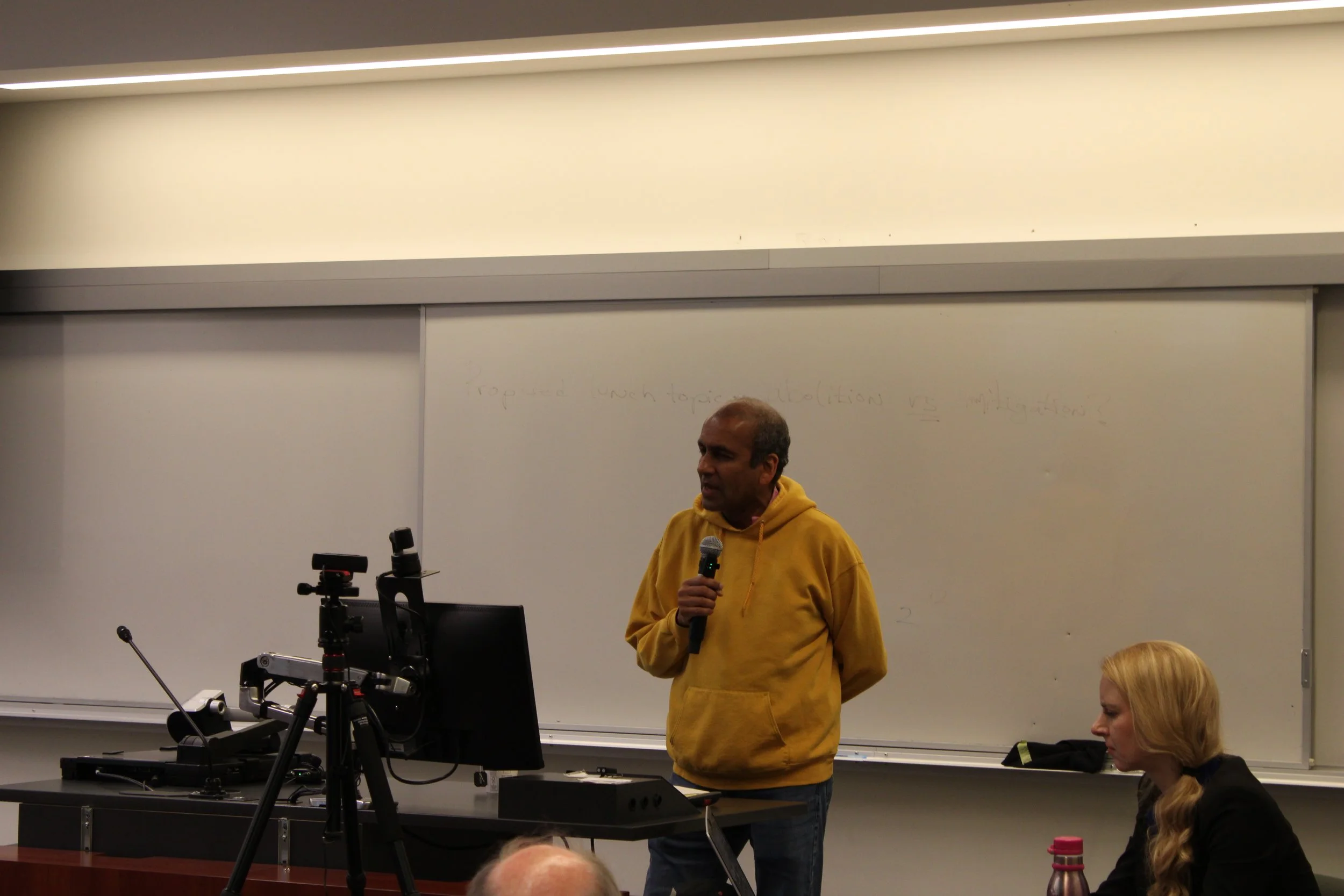
Last to speak was M.V. Ramana, who described the situation tersely.
“There is no solution to this crisis,” he said, elaborating that, “if by solution, you mean that everything can stay as it is, and we can just keep operating but
just with something different.”Dr. Ramana argued that when problems are systemic, the underlying political and economic systems need to change.
“These systems, capitalism for one, exist and are thriving (...) at the expense of all of us because there are individuals and organizations that profit
enormously from this,” he said, adding any calls to change the current system is a threat to established sources of power and wealth.
Dr. Ramana recalled one instance where OpenAI CEO Sam Altman was being questioned about his position on the board of a nuclear energy company
called Oklo. Altman’s answer posed nuclear power as the only solution to rising energy requirements of AI, with the alternative being degrowth.
“What's important is the fact that he brings this up in a context where he's not being asked about degrowth,” Dr. Ramana pointed out, “he's worried that people
might start talking about degrowth, which then means that he will not be having the billions and billions of dollars that he has.”
According to Dr. Ramana, those in power reduce the ecological crisis down to just climate, which is compressed even further into just dealing with the carbon problem.
This allows them to push technologies, like nuclear, to the forefront. However, in Dr. Ramana’s book, he found that “These companies and these individuals don't usually
support nuclear power unless it's legislated or it is being administered in a way that they can pass on the costs and the risks to the people while privatizing all the profits.”
That is currently the state of legislation surrounding nuclear energy in the United States, but the Carney administration is currently positioning itself to welcome construction
of large AI data centres with its recently published AI strategy. Dr. Ramana concluded his speech by warning that current timelines for approving nuclear reactors are arbitrary
and far too short to account for all possible points of failure.
Conclusion
While several speakers focused on the reality of challenging a nuclear world order, they always left hope for creating a better future.
While the current U.S. administration represents a diplomatic challenge for anyone trying to build a better world, Dr. Ira Helfand predicted that “this too shall pass,” and the U.S. and Canada would meet on equal grounds again soon.
“If we stop trying, then it's guaranteed that the other side will win,” Dr. Jaramillo said, while pointing out the role IPPNW has played in keeping the Non-Proliferation Treaty (NPT) alive.
Dr. Edwards explicitly called IPPNWC to action, expressing the need for the IPPNWC to make its voice heard during this period of nuclear rearmament.
To download the full recording of the event including a Q&A, go to https://drive.google.com/file/d/1a-1zrEO8EcqlXShE77k44soqc67r-OOY/view?usp=drive_link
If you would like to help the IPPNWC make its voice heard by joining or donating, go to https://www.ippnwcanada.ca/ to help take the first step to building a healthier future.